0

Why does it matter if you leave the Catholic Church?

church history

Why does it matter if you leave the Catholic Church?

It matters because as Catholics we think it is important to belong to the Church that Christ founded 2000 years ago. It matters because when you leave the Catholic Church, you leave the Eucharist – and all the sacraments that Christ Himself instituted. It matters because as Catholics we believe the Church contains the fullness of the truth, because it was founded by Christ Himself. This does not mean that we think other religions and Christian denominations do not contain any truth, for they do. But the Catholic Church, since it was founded by Jesus, contains the fullness of truth, so we think it is very important to belong to the Catholic Church and share our faith with others.

Does this mean that Catholics are holier than non-Catholics? Absolutely not. Some of the holiest people I know are Catholic, and some of the most unholiest people I know are Catholic. We’ve been given this beautiful gift of our Catholic faith, and yet too many of us have taken it for granted (guilty as charged!) or have not appreciated what we have.

The Catholic Church is both human and divine. Because it is divine, it will last forever. Because it is human, it will have scandals, and sinful people in it, just like what you will find in all denominations and religions. Scandals do not prove that the Catholic Church is false. They only prove what is obvious: that the Church contains sinners as well as saints.

Despite humans messing things up at times, the Catholic Church was founded by Christ, and will FOREVER be guided by the Holy Spirit until the end of time, as quoted in scripture:

“I have yet many things to say to you, but you cannot bear them now. When the Spirit of truth comes, he will guide you into all the truth; for he will not speak on his own authority, but whatever he hears he will speak, and he will declare to you the things that are to come. John 16:12-13

“I am with you always, to the close of the age.” Matthew 28:19-20

Among all the Christian churches, ONLY the Catholic Church has existed since the time of Jesus. Every other Christian church is an offshoot of the Catholic Church. The Eastern Orthodox churches broke away from unity with the pope in 1054. The Protestant churches were established during the Reformation, which began in 1517. Most of today’s Protestant churches are actually offshoots of the original Protestant offshoots, each with their own man made traditions.

Only the Catholic Church existed in the tenth century, in the fifth century, and in the first century, faithfully teaching the doctrines given by Christ to the apostles, omitting nothing. The line of popes can be traced back, in unbroken succession, to Peter himself. This is unequaled by any institution in history.

Even the oldest government is new compared to the papacy, and the churches to which door-to-door missionaries belong are young compared to the Catholic Church. Many of these churches began as recently as the nineteenth or twentieth centuries. None of them can claim to be the Church Jesus established.

The Catholic Church has existed for 2,000 years, despite constant opposition from the world. This is testimony to the Church’s divine origin. It must be more than a merely human organization, especially considering that its human members—even some of its leaders—have been unwise, corrupt, or prone to heresy. Any merely human organization with such members would have collapsed early on. The fact that the Catholic Church is today the most vigorous church (and the largest, with about a billion members) is testimony not to the cleverness of the Church’s leaders, but to the protection of the Holy Spirit.

If you have never studied Church history, study it now and see what the early Church was really like, what Catholics believed, and what they practiced. If you study it you will see that the early Church was totally Catholic. The early Church believed in the Real Presence of Christ in the Eucharist; Early Christians did pray for their dead; Christ did give the apostles the power to forgive sins; Peter was clearly chosen by Christ as the leader of His Church; Mary was loved and honored by the early Christians; Whole households (including babies) were baptized. Think about it – if you are looking for a personal relationship with Jesus Christ, you can’t get more personal than when you receive His body, blood, soul, and divinity in the holy Eucharist, and are a part of the actual Church that Christ founded.

It’s important to know history, know why we are Catholic, and embrace the beauty and truth of our faith. So many people converted to the Catholic Church after studying Church history, particularly regarding the issue of authority. (Two great books to read on church history are: “Four Witnesses”, by Rod Bennett, and “The Father Knows Best” by Jimmy Akin.)

The Catholic Church, founded by Christ, contains the fullness of Truth. Be grateful for the beautiful gift of our Catholic faith, and then pass on our beautiful teachings and traditions to your children and grandchildren. If you don’t, who will?

0

Remember – Holy Day of Obligation this Monday, December 8th!

whose conception

Remember – this Monday, December 8th is the Feast of the Immaculate Conception, and a Holy Day of Obligation. Many think it is about the conception of Jesus, but it is not. This Feast is a celebration of Mary’s immaculate conception. Here is some more information that helps to clarify this feast:

0

Why do Catholics confess their sins to a priest, and not directly to God?

Confession

Why do Catholics confess their sins to a priest, and not directly to Jesus? Why is it so important to go to Confession?

Catholics always confess their sins to God. We do it directly as well as through His ministers because that is what God requires, as clearly taught in Scripture.

The Sacrament of Penance is one of the seven sacraments instituted by Jesus Christ Himself on Easter Sunday, when He first appeared to the apostles after his Resurrection. Breathing on them, he said: “Receive the Holy Spirit. For those whose sins you forgive, they are forgiven; for those whose sins you retain, they are retained” (John 20:22-23). Jesus is clearly giving the disciples the authority to forgive, and not to forgive sins.

Think about it . . . the only other time that God breathed on anyone was when He breathed life into the first human being. (Genesis 2:7.) Both breathing instances were that of an intimate and very powerful moment between God and man.

Sacraments are an outward sign of an inward grace. In this case, the outward sign is the absolution, or forgiveness of sins, that the priest grants to the penitent (the person confessing his sins); the inward grace is the reconciliation of the penitent to God.

But how would His priests” forgive or retain” unless they actually “hear” the sins? If Jesus intended for everyone to confess their sins directly to God, why would Jesus need to give His apostles the authority to forgive? In Matthew 18:18, Jesus again gives the apostles authority to forgive sins by stating: “Whatsoever ye shall bind on earth shall be bound in heaven: and whatsoever y shall loose on earth, shall be loosed in heaven.” Powerful stuff here.

There are many non-Catholic Christians who believe that sins are wiped away in Baptism. This means they believe that their ministers or pastors are used by God as His instruments in the forgiveness of sins through a sacrament, Baptism, which they administer. Catholics also believe this about Baptism, but we also believe that priests are used by God as His instruments for the forgiveness of sins in three sacraments: Confession, Anointing of the Sick, and Baptism. Many Christians believe God can use their ministers and pastors as instruments in His physical healing, so why wouldn’t God do the same with spiritual healing?

Three things are required of a penitent in order to receive the sacrament worthily: You must be sorry for your sins; you must confess those sins fully, in kind and in number to the best of your knowledge, and you must be willing to do penance and make amends for your sins. Since it was instituted by Christ as the proper form for the forgiveness of sins, the Catholic Church requires us to receive it at least once per year, and whenever we have committed a mortal sin. The Church strongly recommends that we take advantage of the sacrament often, since it confers graces that help us to live a Christian life. It is a beautiful gift that we should embrace and use frequently. Many people go once a month, some every week. We all need more grace in our lives.

Remember, to receive Holy Communion worthily, you must be in a state of grace. “Whoever, therefore, eats the bread or drinks the cup of the Lord in an unworthy manner will be guilty of profaning the body and blood of the Lord. Let a man examine himself, and so eat of the bread and drink of the cup” (1 Cor. 11:27–28). To receive the Eucharist without sanctifying grace in your soul profanes the Eucharist in the most grievous manner.

As Christ well knew, to confess your sins to a priest, whom God has given the authority to be His stand-in, and actually state aloud the sin is not an easy thing to do. It requires humility, a heart-felt examination of conscience, trust in God and His Church, and a true contrition of heart. It can often seem like a frightening, humiliating act, especially if you have been away from it for years. But once you do, it is guaranteed that a relief and cleansing will immediately follow, as well as a strong sense of forgiveness. There is no doubt that you are forgiven when you hear the words of absolution spoken from Jesus’ representatives on earth, His priests.

Nothing in the world can compare to the joy of the soul after a good confession. The veil of sin falls away and the light of grace fills the soul. If you have not been to confession in a while – just go. God knows we all need it. If you’re nervous, pray for peace in your heart, and that you will make a good confession.

Don’t be afraid – just go – and keep going back. What a great way to start off the Advent season. This Christmas try to step back a bit from the focus on gifts and the commercialization of this holy season. Instead perhaps take some time to turn your focus on the real meaning of Christmas – the birth of our Lord Jesus Christ. Have fun, celebrate with family and friends, but take time to pray, serve others, and really think about the impact that the birth of Christ has made on our world. Confession is a beautiful way to prepare your hearts for his arrival, and will give you true joy and peace.

God loves you and can’t wait to see you at Confession. Trust in His mercy. Just go. How about today?

2

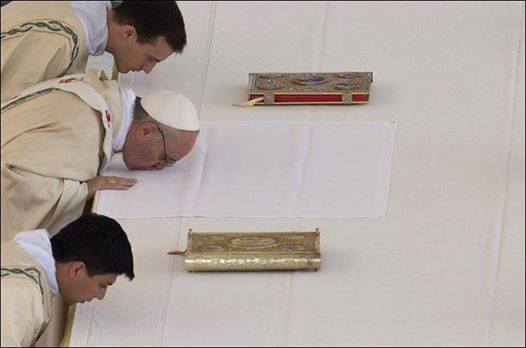
Kissing the Altar

“When the priest approaches the altar, the very first thing he does is kiss the altar. In keeping with an ancient tradition, kissing an object shows a reverence for what or whom it represents. The altar symbolizes Christ; it is also the place where the sacrifice of Calvary takes place anew. So in kissing the altar, the priest greets his friend and Lord, for whom he has given over his life and for whose service he has been ordained. At the same time, presiding over the assembly, he acts for all believers in showing the Church’s love for her spouse, Jesus Christ.” (Archbishop Charles Chaput)
 
Image


3

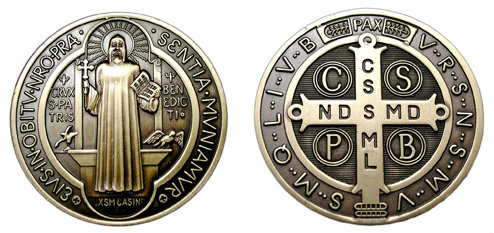
Medal of St. Benedict – powerful sacramental

The medal of St. Benedict is a very powerful sacramental.

According to the Benedictines, “The purpose of using the medal is to call down God’s blessing and protection on us, wherever we are, and upon our homes and possessions, especially through the intercession of St. Benedict. The medal is a prayer of exorcism against Satan, a prayer in time of temptation, a prayer for peace among ourselves and among the nations of the world, a prayer that the cross of Christ be our light and guide, a prayer of firm rejection of all that is evil, a prayer of petition that we may with Christian courage walk in God’s ways, with the Gospel as our guide.”

It is known that Saint Benedict had a deep and strong faith in the Cross of Jesus Christ, and how he worked miracles with the sign of the cross. God wants to protect us from evil and danger of all kinds. The purpose of using the medal in any of the above ways is to call down God’s blessing and protection upon us, upon our homes and possessions, especially through the intercession of St. Benedict.

By carrying the Medal of Saint Benedict with us, we embody the Holy Cross and the Rule of Saint Benedict, and use it as protection from evil and danger. It can be worn on a chain around the neck, attached to one’s rosary, kept in one’s pocket or purse, or placed in one’s car or home or workplace.

The one rule about the St. Benedict Medal (whether it is on a Crucifix or not) is that it be properly blessed by a priest with the Benedictine blessing. Dear St. Benedict, pray for us.

Medal of Saint Benedict

0

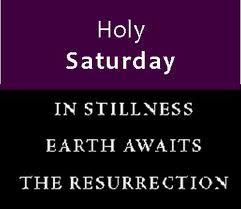
Holy Saturday

Holy Saturday (in Latin, Sabbatum Sanctum), the ‘day of the entombed Christ’, is the Lord’s day of rest, for on that day Christ’s body lay in His tomb. We recall the Apostle’s Creed, which says “He descended unto the dead.” It is a day of suspense between two worlds, that of darkness, sin and death, and that of the Resurrection and the restoration of the Light of the World. For this reason no divine services are held until the Easter Vigil begins that night. This day between Good Friday and Easter Day makes present to us the end of one world and the complete newness of the era of salvation inaugurated by the Resurrection of Christ.

Nightfall on Holy Saturday is time for joy and greatest expectation because of the beautiful liturgy of the Easter Vigil, often referred to as the Mother of all Holy Vigils, or the Great Service of Light. The Easter Vigil was restored to the liturgy in 1955, during the liturgical reform that preceded the Second Vatican Council.(Women for Faith and Family website)

Holy Saturday Stillness

0

Good Friday is a day of Fasting and Abstinence

No Meat

Remember, it’s Good Friday – just like Ash Wednesday, Good Friday is a day of penance observed by BOTH fasting (only one full meal during the day) and abstinence from meat. All other Fridays during Lent are days of abstinence; we forego the eating of meat to make ourselves conscious of our Lord’s sacrifice of Himself for our sins. The law of fasting is binding for those who are 18 years old but not yet 60; the law of abstinence is binding for those 14 years of age and older.

Fridays during Lent are obligatory days of abstinence. Abstinence refers to the avoidance of certain foods. The most common form of abstinence is the avoidance of meat, a spiritual practice that goes back to the earliest days of the Church.

Catholics over the age of 14 are required to abstain from meat and from foods made with meat in honor of the Passion of Jesus on Good Friday.

According to the USCCB, “abstinence laws consider that meat comes only from animals such as chicken, cows, sheep or pigs – all of which live on land. Birds are also considered meat. Abstinence does not include meat juices and liquid foods made from meat. Thus, such foods as chicken broth, consomme, soups cooked or flavored with meat, meat gravies or sauces, as well as seasonings or condiments made from animal fat are technically not forbidden. However, moral theologians have traditionally taught that we should abstain from all animal-derived products (except foods such as gelatin, butter, cheese and eggs, which do not have any meat taste). Fish are a different category of animal. Salt and freshwater specaes of fish, amphibians, reptiles (cold-blooded animals) and shellfish are permitted.”

Many Catholics do not realize that the Church still recommends abstinence on all Fridays of the year, not just during Lent. In fact, if we don’t abstain from meat on non-Lenten Fridays, we’re required to substitute some other form of penance.

0

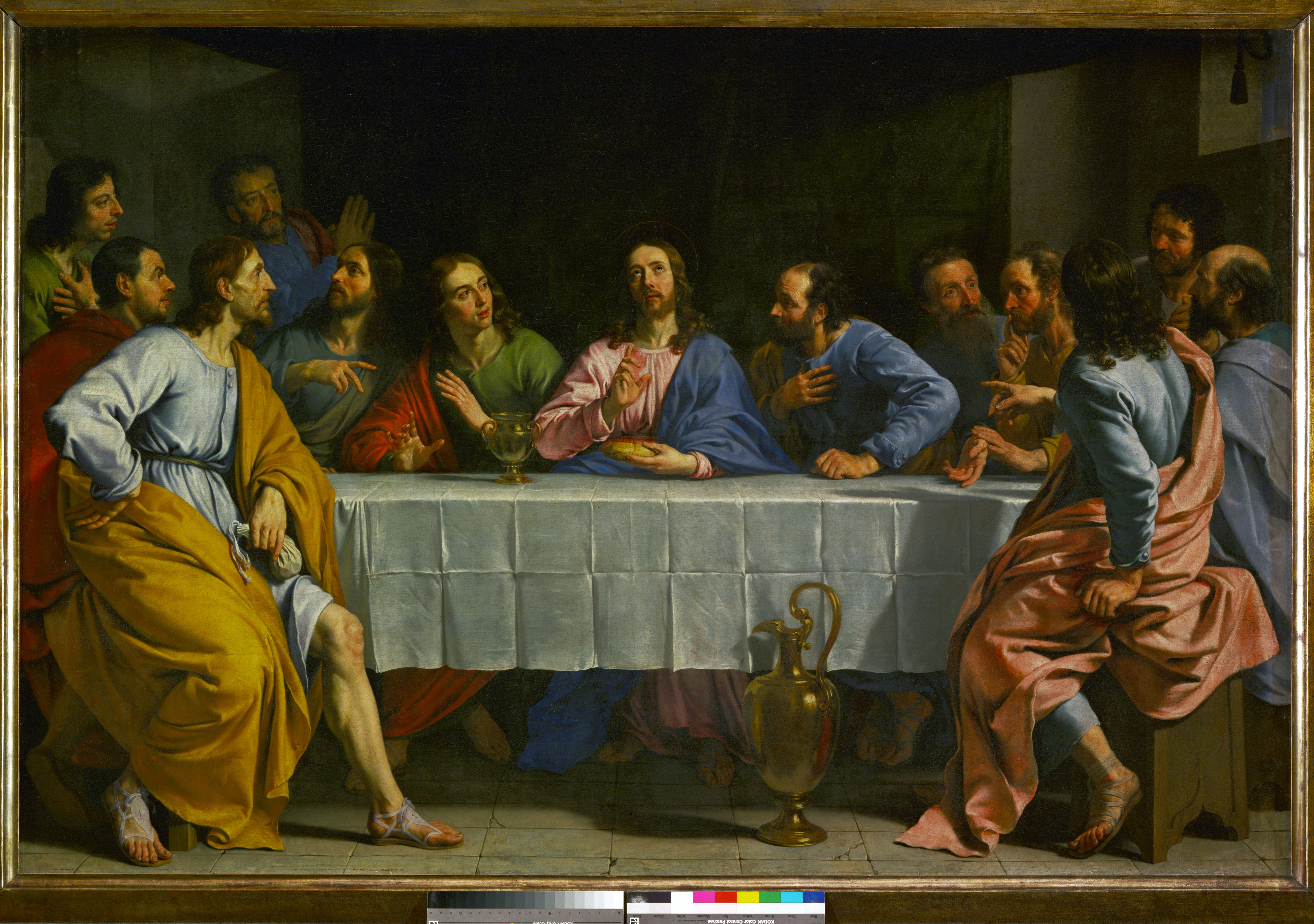
Holy Thursday

Champaigne,Philippe de (1602-1674)

The Easter Triduum (sometimes called the Paschal Triduum) begins on Holy Thursday with the evening Mass of the Lord’s Supper, is continued through Good Friday with the celebration of the Passion of the Lord and Holy Saturday, reaches its summit in the Easter Vigil, and concludes with Vespers (evening prayer) of Easter Sunday.

Holy Thursday is the day on which Christ celebrated the Last Supper with His disciples. This is the day we celebrate the institution of the Eucharist as the true body and blood of Jesus Christ and the institution of the sacrament of the priesthood.

During the Last Supper, Christ blessed the bread and wine with the same words that Catholic and Orthodox priests use today to consecrate the Body and Blood of Christ during the Mass. In telling His disciples to “Do this in remembrance of Me,” He instituted the Mass and made them the first priests. During the Last Supper, Jesus offers himself as the Passover sacrifice, the sacrificial lamb, and teaches that every ordained priest is to follow the same sacrifice in the exact same way.

The washing of the feet represents the service and charity of Christ, who came “not to be served, but to serve.”

It was only a few hours after the Last Supper that Judas would betray Christ in the Garden of Gethsemane, setting the stage for Christ’s Crucifixion on Good Friday.

Near the end of the Last Supper, after Judas had departed, Christ said to His disciples, “A new commandment I give unto you: That you love one another, as I have loved you, that you also love one another.” The Latin word for “commandment,” mandatum became the source for another name for Holy Thursday: Maundy Thursday.

At the conclusion of the Mass, the faithful are invited to continue Adoration of the Blessed Sacrament throughout the night, just as the disciples were invited to stay up with the Lord during His agony in the garden before His betrayal by Judas.

After Holy Thursday, no Mass will be celebrated again in the Church until the Easter Vigil celebrates and proclaims the Resurrection of the Lord Jesus Christ.

0

Why I started this Catholic blog . . .

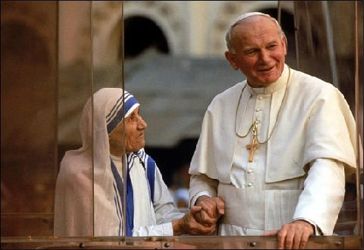
pope John paul and mother teresa

This blog was set up to spread the joy and beauty of the Catholic faith. It is for Catholics, fallen away Catholics, or anyone who might be interested in learning more about our faith, and perhaps understand a little bit better what we believe and why we believe it, using faith and reason. Our Catholic faith is attacked on a daily basis by the media, atheists, other religions, organizations, other Christians, and by Catholics who have left the faith, so it is important to be able to answer questions about our faith, and defend it (charitably) when necessary.

All of us know of Catholics who have left the Church for various reasons. Some left, and came back. Others were encouraged to leave and join other churches or religions, or they left religion all together. They left because they did not feel that they had a “personal relationship” with Jesus in the Catholic Church. They left because they were hurt about a particular teaching. They left because they were fed up with the behavior of other Catholics, priests and bishops. They left because they were not taught the true beauty and joy of our faith, even though they may have attended Catholic schools their whole life. They left because they thought the homilies were boring, or the music was not entertaining enough. They left because they didn’t feel welcome in the Catholic Church. They left sometimes for no reason at all – just that God and church were not a priority in their lives anymore. Regardless of the reason, many Catholics have left the Church and we want them to come back home.

When they leave, and go elsewhere, they are often taught that the Catholic religion is wrong, that we worship Mary, that the Pope is the anti-Christ, that we are not Biblical, that we do not need to baptize our babies, and that we are all brainwashed and can’t think for ourselves. They are told that Catholics never read the Bible, that we don’t have a personal relationship with Christ, that purgatory is not biblical and made up, that abortion is okay, that marriage should be re-defined, or not defended, that you should never ask Mary or the saints to pray for you, and that the Eucharist is just a symbol, and not the body, blood, soul and divinity of Christ.

And why does it matter if they leave the Catholic Church, as long as they are following Jesus? It’s all the same right? Why should we care? Why does it matter?

It matters because as Catholics we think it is important to belong to the Church that Christ founded nearly 2000 years ago. It matters because when you leave the Catholic Church, you leave the Eucharist – and all the sacraments that Christ Himself instituted. It matters because as Catholics we believe the Church contains the fullness of the truth, because it was founded by Christ Himself. This does not mean that we think other religions and Christian denominations do not contain any truth, for they do. But the Catholic Church, since it was founded by Jesus Himself and not a man, contains the fullness of truth, so we think it is very important to belong to the Catholic Church and share our faith with others.

Does this mean that Catholics are better than other Christians, or holier than non-Catholics? Absolutely not. Some of the holiest people I know are Catholic, but some of the most unholiest people I know are Catholic. However, do I believe the Catholic Church is the one true Church founded by Christ Himself and contains the fullness of the Truth? Absolutely Yes.

Think about it. If you didn’t think your church contained the “Fullness of Truth”, why would you want to be a part of it? If it contained “most” of the truth, is that good enough for you? If my child had a teacher at school that taught “half truths” about a subject, would I want my child taking that class? Really think about this.

Truth is not up to a majority vote, where you can just pick and choose what is truth based on how you want to live your life at the time. Jesus is the Way, the Truth and the Life. Jesus doesn’t change. Jesus is the same yesterday, today and tomorrow. Truth doesn’t change according to our ability to stomach it, and cannot mean two opposite things. It either is the truth or it isn’t. (For example – the Eucharist either is the body, blood, soul and divinity of Christ, or it isn’t.) There are many, many things all Christians have in common that we should celebrate – mainly our belief in Jesus Christ. Many say as long as we agree on the essentials it’s all good. But who decides what is “essential”? To a Catholic, the Eucharist is essential, to a non-Catholic, it is merely a symbol. To a Catholic baptizing our children and our love and devotion to our Blessed Mother are “essential.” To a non-Catholic they are not. To a Catholic, abortion is not okay, to many others, it isn’t important to defend these little lives who are brutally murdered in their mother’s womb. These “essentials” matter to a Catholic.

The Catholic Church is both human and divine. Because it is divine, it will last forever. Because it is human, it will have scandals, and sinful people in it, just like what you will find in all Protestant denominations,religions, atheist groups, governments, and families. Scandals do not prove that the Catholic Church is false. They only prove what is obvious: that the Church contains sinners as well as saints. Yes there have been terrible things that have happened in our Church – the sexual abuse scandal was horrible. I personally was disgusted with the behavior of some priests and bishops. Unfortunately this is not just a “Catholic” problem – the abuse of children happens throughout every religion, protestant denomination, organization (yes even atheist abuse children), school and family. According to what you hear and read in the media, it is just a “Catholic” problem. Not true. There is Evil everywhere. Evil does not discriminate and has no boundaries. Despite humans messing things up at times, the Catholic Church was founded by Christ, and will forever be guided by the Holy Spirit until the end of time. As St. Teresa of Avila says, “The Truth suffers, but never dies.”

There are over a billion Catholics in the world, many of them holy and devout people, doing their best to imitate and lead souls to Christ. It’s not too often that we hear the good that the Church does to help so many. Among all the Christian churches, only the Catholic Church has existed since the time of Jesus. Every other Christian church is an offshoot of the Catholic Church. The Eastern Orthodox churches broke away from unity with the pope in 1054. The Protestant churches were established during the Reformation, which began in 1517. Most of today’s Protestant churches are actually offshoots of the original Protestant offshoots.

Only the Catholic Church existed in the tenth century, in the fifth century, and in the first century, faithfully teaching the doctrines given by Christ to the apostles, omitting nothing. The line of popes can be traced back, in unbroken succession, to Peter himself. This is unequaled by any institution in history.

Even the oldest government is new compared to the papacy, and the churches to which door-to-door missionaries belong are young compared to the Catholic Church. Many of these churches began as recently as the nineteenth or twentieth centuries. None of them can claim to be the Church Jesus established

The Catholic Church has existed for nearly 2,000 years, despite constant opposition from the world. This is testimony to the Church’s divine origin. It must be more than a merely human organization, especially considering that its human members—even some of its leaders—have been unwise, corrupt, or prone to heresy. Any merely human organization with such members would have collapsed early on. The fact that the Catholic Church is today the most vigorous church (and the largest, with about a billion members) is testimony not to the cleverness of the Church’s leaders, but to the protection of the Holy Spirit.

Church history does matter, because if you study it you will see that the early Church was totally Catholic. The early Church believed in the Real Presence of Christ in the Eucharist; Early Christians did pray for their dead; Christ appointed Peter the first pope as the leader of the early Church; Christ did give the apostles the power to forgive sins; Mary was loved and honored by the early Christians, Whole households (including babies) were baptized, etc. . . Think about it – if you are looking for a personal relationship with Jesus Christ, you can’t get more personal than when you receive His body, blood, soul, and divinity in the holy Eucharist, and are a part of the actual Church that Christ founded. It’s important to know this, know why we are Catholic, embrace the fullness of our faith and then be faithful, holy witnesses to others.

If you have never studied Church history, study it now and see what the early Church was really like, what Catholics believed, and what they practiced. So many protestant pastors have converted to the Catholic Church after studying Church history, particularly regarding the issue of authority. (Two great books to read on church history are: “Four Witnesses”, by Rod Bennett, and “The Father Knows Best” by Jimmy Akin.)

Blessed Pope John Paul II and Blessed Mother Teresa are two Catholics who truly lived their Catholic faith. Their holiness, love for Christ, and devotion to Our Lady set a wonderful example for all of us to follow. Remember – our goal is Heaven, bringing souls to Christ, and letting others know about the Church that Christ founded. As Christians we are all in this together, doing the best that we can to imitate Christ. As Catholic Christians, it is important to know what we believe and why we believe it, so that we can share the joy and beauty of our faith with others and help others on their journey to the Catholic Church. And please teach your children all about our beautiful faith, about Christ and His Church. Be sure to teach them apologetics as well – how to defend their faith using faith and reason. They will definitely come across many attacks and wrong information that others will tell them about the Catholic Church, so be sure to teach them as well.

So welcome to this “Love Being Catholic” Facebook page! Hopefully we will all learn a little bit more about our beautiful faith, and share the love of Christ and his Church with others. Please always remember to love, defend, share and live your Catholic faith humbly, joyfully and charitably. For those who have left, please come back. There is so much that many of us did not know about our faith growing up, and we hope with God’s grace this will touch some of you to at least think about returning to the Catholic faith. For those of you who are just entering the Church – welcome home!

Wherever you are on your journey, know that Jesus loves you. We love you where you are, and our hope and prayers are that you will be led gently and joyfully back to the Catholic Church. Being a part of the Church that Christ founded will bring you much joy, peace and closer to Christ than you could ever imagine.