1

Why a crucifix and not an empty cross?

Curcifix

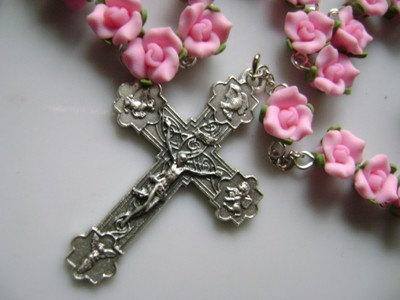
Why do Catholics wear and Catholic Churches display a crucifix, instead of an empty cross? Why do we leave Jesus on the cross? Does this mean we worship a “dead” Jesus, and that we downplay the resurrected Jesus?

Not at all.

Catholics worship both the Jesus who died for their sins and the Jesus who rose from His sacrificial death for their sins. We believe that “Christ has died, Christ is RISEN, Christ will come again.”

Jesus says, “Greater love has no man than this, that a man lay down his life for his friends.” (John 15:13) Jesus displayed on the Cross displays His unconditional love and infinite mercy for us. Everything Jesus gives to us is through the Cross. In our Christian journey, we, like Jesus, carry our cross. Catholics not only preach Christ Risen, but also Christ Crucified.

The heart of the Gospel message is Jesus, our promised Messiah, died for our sins for the salvation of our soul. St. Paul preached Jesus’ Crucified and tells us in 1 Corinthians 1:23, “. . . but we preach Christ crucified . . . ” But Jesus is risen, what is Paul speaking about? Doesn’t he know that we should not be concentrating on Jesus’ death? Again, in Corinthians 2:2 Paul writes, “For I decided to know nothing among you except Jesus Christ and Him crucified.” Here St. Paul says Jesus is our example in enduring the Cross.

Some have expressed distaste at the thought of depicting Jesus at his most vulnerable. Guess what? This should make you uncomfortable. Jesus does not want us to look at His Crucifixion as only a past event. Every lash that he took, every blow that drove the nail into his hands was caused by you and me. Our sins – past, present and future, hung Jesus on that cross. The crucifix is the ultimate expression of the lengths that a loving God will go to reach us. Gazing at a crucifix is a truly humbling experience.

If you really think about it, the next time someone questions you for wearing a crucifix, and not an empty cross, (if you want to get nit-picky) Jesus rose from the tomb, not the cross. In order to represent his victory over death (which is what some claim the empty cross does) one would have to wear a little copy of the tomb or a tiny rock.

Think about when Jesus appeared to the apostles after His Resurrection and in His glorified risen Body. He showed them His wounds from His Crucifixion. (Luke 24:39-40 & John 20:20) Why would Jesus keep those wounds from His Crucifixion if He did not want us to remember His Crucifixion?

Although Jesus is no longer on the Cross, His offering Himself to us as our Savior continues to this day. Jesus says we cannot be His follower (a Christian) unless we pick up our cross to follow Him. (Matthew 16.24) Jesus never promised His followers a Christian life free from sufferings and trials. He promised us the very opposite. He promised that we too would have a cross to carry; and unless we endure our sufferings and trials in faith for Him as He has done for us, we cannot be His follower. We cannot rise in Christ to new life without first dying with Christ on the Cross.

Whether you wear an empty cross, or a crucifix, the cross displays the love our savior, Jesus Christ, has for all of us. I hope this short explanation helps others understand why Catholics love the crucifix so dearly.

So please remember to display your beautiful crucifixes in your home, and wear them humbly around your neck. (Remember to get them blessed!) And remember, “Christ has died, Christ is risen, Christ will come again.

1

Do Catholics worship statues?

14910302_1146935965355959_2373718046047632366_n

Do Catholics worship statues or images?

No.

Catholics use statues, paintings, and other artistic devices to recall the person or thing depicted. Just as it helps to remember one’s mother by looking at her photograph, so it helps to recall the example of the saints by looking at pictures or statues of them.

Catholics also use statues as teaching tools. In the early Church they were especially useful for the instruction of the illiterate. Many Protestants have pictures of Jesus and other Bible pictures in Sunday school for teaching certain people and have three-dimensional nativity scenes at Christmas.

God forbids the worship of images as gods, but he doesn’t ban the making of images. If he had, religious movies, videos, photographs, paintings, and all similar things would be banned. It is when people begin to adore a statue as a god that the Lord becomes angry. Thus when people did start to worship the bronze serpent as a snake-god (whom they named “Nehushtan”), the righteous king Hezekiah had it destroyed (2 Kgs. 18:4).

Think about Mt. Rushmore, the Lincoln Memorial, the 911 Memorial in New York, and all the statues in Washington D.C. and around the world. People go to see these statues and stand in front of them, sometimes bow their heads in prayer, or stand their staring at the statue or piece of marble in awe. Does this mean these people are worshiping these statues? Absolutely not.

Since many Catholics sometimes bow or kneel in front of statues of Jesus and the saints, many non-Catholics confuse the legitimate veneration of a sacred image with the sin of idolatry. Catholics do not believe their statues, made of plaster, are God. A statue, or any other piece of religious art, is intended to draw the soul deeper into prayer by helping the senses to recall the mystery that it represents. Crucifixes, a statue of Mary or stain glass windows help for a soul to meditate and contemplate the great mysteries of God.

Though bowing can be used as a posture in worship, not all bowing is worship. In Japan, people show respect by bowing in greeting (the equivalent of the Western handshake). Similarly, a person can kneel before a king without worshiping him as a god. In the same way, a Catholic who may kneel in front of a statue while praying isn’t worshiping the statue or even praying to it, any more than the Protestant who kneels with a Bible in his hands when praying is worshiping the Bible or praying to it.

The bottom line is, when God made the New Covenant with us, he did reveal himself under a visible form in Jesus Christ. For that reason, we can make representations of God in Christ. Even Protestants use all sorts of religious images: Pictures of Jesus and other biblical persons appear on a myriad of Bibles, picture books, T-shirts, jewelry, bumper stickers, greeting cards, compact discs, and manger scenes. Christ is even symbolically represented through the Icthus or “fish emblem.”

Common sense tells us that, since God has revealed himself in various images, most especially in the incarnate Jesus Christ, it’s not wrong for us to use images of these forms to deepen our knowledge and love of God. That’s why God revealed himself in these visible forms, and that’s why statues and pictures are made of them.

The Church absolutely recognizes and condemns the sin of idolatry. What non-Catholics fail to recognize is the distinction between thinking a piece of stone or plaster is a god and desiring to visually remember Christ and the saints(who are alive in heaven, not dead) by making statues in their honor.

The making and use of religious statues is a thoroughly biblical practice, and a beautiful way to deepen your faith and grow closer to Christ.

0

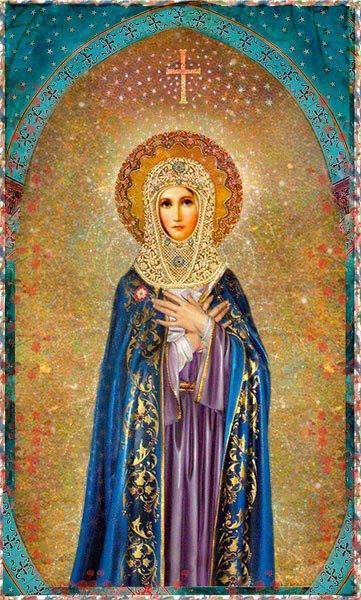
Mary our Queen

Mary Queen of Peace

Mary is referred to as queen not just of heaven, but also of peace, of the angels, of all Christians, among many other things.

Because Mary is the mother of Christ the King, it is logical that she would be called Queen. (A modern example would be the mother of Queen Elizabeth II of England, who was known as the Queen Mother.)

Pope Pius XII affirmed this in his encyclical Ad Caeli Reginam when he wrote, “according to ancient tradition and the sacred liturgy the main principle on which the royal dignity of Mary rests is without doubt her Divine Motherhood.” St. Alphonsus Ligouri, said, “Because the virgin Mary was raised to such a lofty dignity as to be the mother of the King of kings, it is deservedly and by every right that the Church has honored her with the title of ‘Queen.’”

Mary played such an important role in bringing Christ the Redeemer into the world. Certainly, only Jesus Christ, the God-Man, is King; but Mary, too, as Mother of the Jesus, is given the title of Queen , not meaning she is on equal footing with God, but reflects instead how intimately connected she was, and is, to her son and his mission.

Dear Mary, Queen of Heaven, pray for us.

1

Spread love everywhere you go . . .

mother-teressa

Spread love everywhere you go: first of all in your own house. Give love to your children, to your wife or husband, to a next door neighbor… Let no one ever come to you without leaving better and happier. Be the living expression of God’s kindness; kindness in your face, kindness in your eyes, kindness in your smile, kindness in your warm greeting. (Saint Teresa of Calcutta)

4

The Rosary

14573044_1136718329711056_1585771266633903471_n

The month of October is dedicated to the Holy Rosary, one of the best known of all Catholic devotions. Are you praying the rosary every day? If not – today is a good day to start.

4

Morning Prayer

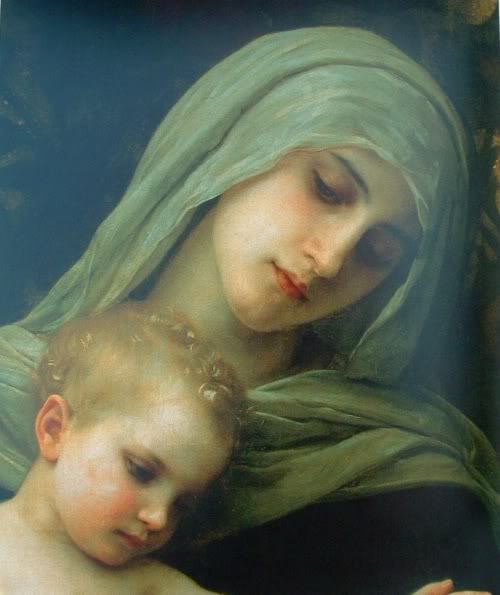
Mary and baby Jesus so sweet

In the name of our Lord Jesus Christ I will begin this day.

I thank you, Lord, for having preserved me during the night. I will do my best to make all I do today pleasing to You and in accordance with Your will. My dear mother Mary, watch over me this day. My Guardian Angel, take care of me. St. Joseph and all you saints of God, pray for me.

O Jesus, through the Immaculate Heart of Mary, I offer You my prayers, works, joys and sufferings of this day for all the intentions of Your Sacred Heart, in union with the Holy Sacrifice of the Mass throughout the world, in reparation for my sins, for the intentions of all my relatives and friends, and in particular for the intentions of the Holy Father.

I wish to gain all the indulgences attached to the prayers I shall say and the good works I shall perform this day. Amen.

0

Thank you!

Mary playing with Jesus

Dear Love Being Catholic friends,

My mission is to help you grow deeper in your love for Christ, His Church, and our Blessed Mother, while at the same time give you some easy-to-understand answers to questions you might have been asked by others about our faith. Through the grace of God, this blog and my Facebook page combined now have over 160,000 friends and are reaching several million people around the world each month.

It takes many hours to research, write and maintain this site, and any support is appreciated! If you’re enjoying this blog, and it has been a blessing to you, please consider supporting it with even a modest donation – every little bit helps.

If you have donated already, I thank you wholeheartedly for making all of this possible. Thank you all for your support and your prayers. Please know that you are all in my prayers as well, and I appreciate each one of you!.

To make a secure donation visit: https://lovebeingcatholic.com/donate/

In Christ,
Liz

1

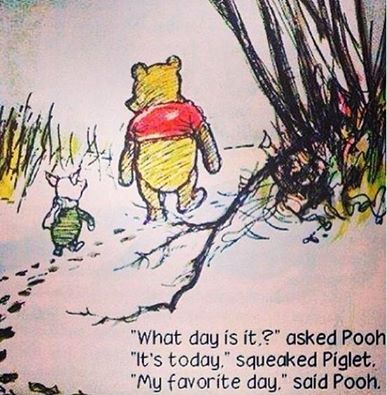
Be Grateful for Today.

Pooh

God is right here, right now, in the present moment. Slow down, be grateful for each moment, and thank Him for another day.


0

The Catholic Mass


Mass

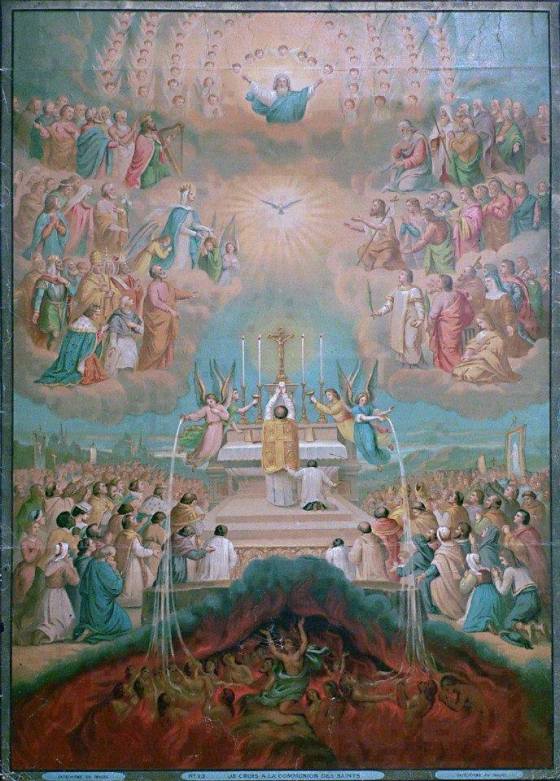
The Mass is the most important and sacred act of worship in the Catholic Church.

The Mass incorporates the Bible (Sacred Scripture), prayer, sacrifice, hymns, symbols, gestures, sacred food for the soul, and directions on how to live a Catholic life — all in one ceremony. Through time and space, we connect with the original Last Supper.

The Church teaches that the Mass is the re-presentation of the sacrifice of Calvary. This is misunderstood by many who claim that the Mass is a re-crucifixion of Christ. It is not. Jesus Christ celebrated the first Mass with His disciples at the Last Supper, the night before He died. He commanded His disciples, “Do this in remembrance of me” (Luke 22:19). The celebration of the Mass then became the main form of worship in the early Church, (2000 years ago) as a reenactment of the Last Supper, as Christ had commanded.

Each and every Mass since commemorates Jesus’ sacrifice on the cross through the Holy Eucharist. Because the Mass “re-presents” (makes present) the sacrifice on Calvary, Catholics all around the world join together to be made present in Christ’s timeless sacrifice for our sins. There is something fascinating about continuing to celebrate the same Mass—instituted by Christ and practiced by the early Church. Study Church history and see how the early Christians celebrated Mass, and you will see it is the same as how Catholics celebrate it today.

Attending Mass is not just an obligation, it’s a privilege. God knows we need it, and it is His gift to us. Mass should be the highlight of our week. We should look forward to going, and when we don’t, it’s a reminder that we need to work harder to more fully understand the reality of what happens at Mass. If you are a Catholic, you are supposed to go to Mass every week, and on Holy Days of Obligation. If you don’t understand the Mass, or are bored, and are looking for better “entertainment” – then pray for understanding.
(Check out Scott Hahn’s book titled “The Lamb’s Supper” – simply beautiful!)

We don’t go to Mass to be entertained, or demand that the priest’s homily be exciting, or if it isn’t we aren’t going back. Some priests are more gifted with amazing homilies. Some are not. Pray for them all and go to Mass regardless..If you’re looking for great entertainment every week, your priorities are all wrong. Go whether you feel like going or not. Love is much more than feelings. (You feed your children every day out of love for them, whether you feel like making it or not.) Going to Mass is good for your eternal soul.

It’s human and natural to forget, want to sleep in, take it for granted, or become numb to it, but we have to continually work to overcome that trap. The devil is real and loves it when you stay home. At Mass we are being offered the greatest gift God has to offer – the source and summit of our Faith, Jesus Christ Himself in the Eucharist.

Learn your faith. Ask questions, study, read the Bible, and learn what it means to be a Catholic Christian. So many Catholics stopped learning about their faith after their Confirmation. They left and joined mega churches which drew teens in, who then brought their parents in because of the exciting bands, great coffee, rock-star personalities, and a pulpit center stage rather than an altar. They have thrown out the sacred and holy – you won’t even find a cross in many of them – but you will have fun and be entertained. Many have replaced the sacred and the holy with elaborate light shows, re-branding of Christianity and enticing marketing campaigns. When you don’t understand your faith, or the Mass, it’s easy to leave it for someplace else that is exciting and sprinkles in just enough truth to make it sound believeable.

Some of the most passionate Catholics today are those who converted to Catholicism as an adult, and understand the meaning of the Mass and the Eucharist. So many of us were not taught our faith when we were young, but are now re-discovering the truth and beauty of it as adults. Learn your faith and learn why we do what we do. Don’t be tempted to leave the church founded by Jesus Christ for better entertainment, and if you have, please come back.

At Mass we get down on our knees to humble ourselves before our King. It’s not about “us” remember. We go for Him. We understand the importance of the sacred and the holy, and how truth and beauty draw us closer to God, so that we can bring His love to others. We need God, though so many in our world today tell you not to worry about what God thinks of you, but only how you treat and love each other. Of course Jesus wants us to love one another – we love and serve the lonely, the poor, the disabled, those in prison, the immigrants, men, women and children around the world, but we also love and care what our loving God thinks of us, and we worship Him as Jesus instructed us to do 2000 years ago.

When we receive the Eucharist, we truly, physically receive the body, blood, soul and divinity of Christ, of God Himself – at every Mass. If you’re looking for a personal relationships with Jesus Christ, you can’t get any more personal than when you receive Him in the Eucharist. The Eucharist is the source and summit of our Catholic faith. Christ is truly present in the Eucharist with or without a dynamic homily.

Notice how it is the altar that is front and center at a Mass, not the pulpit or a personality. Notice how when the priest and deacon enter and leave Mass, they bow down and kiss the altar. They aren’t kissing a pulpit.

The Mass is a sacrifice. We go to Mass to worship God, hear His holy word in the Liturgy of the Word, and receive Christ’s body, blood, soul and divinity in the Eucharist. An inspiring homily and beautiful music absolutely add to the beauty of the Mass, but even without these things, Christ is truly present in the Eucharist. That alone should make you want to never skip Mass, be there on time, not leave early without a good reason, and thank God for this wonderful gift.

Read, study, seek more understanding, and most of all, pray that you will come to a better appreciation and love for this most beautiful gift that Jesus Christ instituted at the Last supper 2000 years ago. God loves you. Please go.

Wishing you all a beautiful Sunday!