Holy Week Begins! Holy Week gives us the opportunity to re-live the passion of Jesus. We can never understand how much He loves us, but we are called to understand and think about the suffering He endured for us here on Earth. Happy Palm Sunday!

Holy Week Begins! Holy Week gives us the opportunity to re-live the passion of Jesus. We can never understand how much He loves us, but we are called to understand and think about the suffering He endured for us here on Earth. Happy Palm Sunday!

Thank you so much for visiting Love Being Catholic! I hope you are enjoying this blog and that in some small way it is helping you to grow deeper in your Catholic faith.
I love providing daily post on this blog and on my Facebook page, “Love Being Catholic”, which now has over 80,000 friends.
I’ve been encouraged by many of you to offer this “donations” button on my site. My mission is to help you grow deeper in your love for Christ, His Church, and our Blessed Mother, while at the same time give you some easy-to-understand answers to questions you might have been asked by others about our faith. Your donations help me to fulfill that mission. If you’re enjoying this page, please consider supporting it with a modest donation – every little bit helps. It takes hundreds of hours to research, write and maintain this site. Any support is appreciated as it would allow me to continue running Love Being Catholic.
If you’ve donated already, I thank you wholeheartedly for making all of this possible. If you find any joy and value in Love Being Catholic, please consider supporting me in my efforts.
To make a secure donation visit: https://lovebeingcatholic.com/donate/
Thank you in advance for your support and may the peace of Christ be with you always!
In Christ,
Liz
Love Being Catholic

The Catholic Church strongly encourages everyone to read the Bible every day for private devotion, to memorize it, love it, and to study it diligently. At every Sunday Mass the Holy Word of God is proclaimed, with readings from the Old Testament, New Testament and Holy Gospel.
But remember, just because you can quote scripture, it doesn’t mean you are interpreting it correctly. Even the devil quoted scripture and used it to promote evil. Anyone can take words from scripture and justify just about anything today. Misinterpretation of Scripture can result in selective acceptance of the truths contained there. Without an authority (the Magisterium) to help us interpret scripture, scripture could be interpreted with having opposite meanings. God is a God of order, not disorder. Truth (God) does not contradict Himself.
Where did the Bible come from? It didn’t just fall out of the sky. And how do we know what books belong in the Bible?
It was the authority of the Catholic Church, in the fourth century, that determined which books were inspired and belonged in the Bible. Think about it. The Bible does not have an inspired table of contents. This list of inspired books is an essential religious truth not contained in the Bible. Therefore, at least one essential religious truth – the contents of the Bible – is found “outside” the Bible.
Jesus left us the Church, which came before the Bible. How did people learn about Jesus after he was crucified, but before the Bible was put together by Catholics in the fourth century? Oral tradition. We trust the Church, established by Jesus Christ, to tell us what books belong in the Bible, and assure us that everything in it is inspired.
Many people, including many protestant pastors, have converted to Catholicism on the issue of authority. Today there is one Catholic Church, yet over 30,000 different protestant denominations, which started breaking away from the church during the Reformation – hundreds of years after the Bible was compiled.
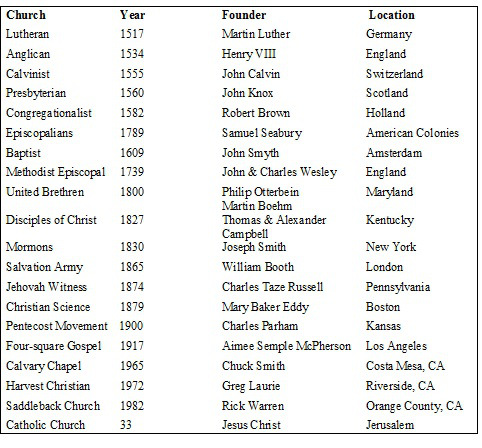
Among all the Christian churches, ONLY the Catholic Church has existed since the time of Jesus. Every other Christian church is an offshoot of the Catholic Church. The Eastern Orthodox churches broke away from unity with the pope in 1054. The Protestant churches were established during the Reformation, which began in 1517. Most of today’s Protestant churches are actually offshoots of the original Protestant offshoots, each with their own man made traditions.
Only the Catholic Church existed in the tenth century, in the fifth century, and in the first century, faithfully teaching the doctrines given by Christ to the apostles, omitting nothing. The line of popes can be traced back, in unbroken succession, to Peter himself. This is unequaled by any institution in history.
Even the oldest government is new compared to the papacy, and the churches to which door-to-door missionaries belong are young compared to the Catholic Church. Many of these churches began as recently as the nineteenth or twentieth centuries. None of them can claim to be the Church Jesus established.
In Matthew 16:18, Jesus creates and builds His Church (not “churches”) on Peter, the Rock. Even hell can’t stop the everlasting existence of His Church. “And I say to you, that you are Peter, and upon this rock I will build my church, and the gates of Hell shall not prevail against it. ”
Jesus left us a Church, giving our first Pope, Saint Peter, the “keys to His kingdom” to be the leader of His Church. In the following verse 19, Jesus gives Peter the keys to the kingdom.
“And I will give you the keys of the kingdom of heaven. And whatever you shall bind on earth shall be bound, even in heaven. And whatever you shall loose on earth shall be loosed, even in heaven.”
Despite humans messing things up at times, the Catholic Church was founded by Christ, and will FOREVER be guided by the Holy Spirit until the end of time, as quoted in scripture:
“I have yet many things to say to you, but you cannot bear them now. When the Spirit of truth comes, he will guide you into all the truth; for he will not speak on his own authority, but whatever he hears he will speak, and he will declare to you the things that are to come. John 16:12-13
Jesus would not have left His church without an authority to guide us in Truth. The Catholic Church existed long before the Bible. The Bible is the product of the Catholic Church. Catholic popes and bishops decided what books belonged in the Bible in the 4th century. This means that the Bible is not the sole rule of faith for Christians, but rather “the Church is the pillar and foundation of the truth” as it says in I Timothy 3:15.
The deposit of faith given the Church by Jesus Christ includes both Holy Tradition and Holy Scripture. The Gospel is both God’s unwritten and written word, not, rather, simply the written word only. As Pope Benedict observed, “Ultimately, it is the living Tradition of the Church which makes us adequately understand sacred Scripture as the word of God” (Verbum Domini, 17-18).
To trust the Bible is to trust the authority of the Catholic Church.

Why does it matter if you leave the Catholic Church?
It matters because as Catholics we think it is important to belong to the Church that Christ founded 2000 years ago. It matters because when you leave the Catholic Church, you leave the Eucharist – and all the sacraments that Christ Himself instituted. It matters because as Catholics we believe the Church contains the fullness of the truth, because it was founded by Christ Himself.
What is the “pillar and foundation of truth”? According to the Bible, it is the Church:
1 Timothy 3: 14-15 “I hope to come to you soon, but I am writing these instructions to you so that, if I am delayed, you may know how one ought to behave in the household of God, which is the church of the living God, the pillar and bulwark of the truth.” Jesus left us a Church to guide us in Truth. He chose Peter as the first Pope when He said, “You are Peter, and on this rock I will build my Church, and the gates of hell will not prevail against it” (Matt. 16:18). And then, this Church – the Catholic Church, decided what books belonged in the Bible in the 4th century. It was the authority of the Catholic Church that decided what books were inspired and belonged in the Bible. (Think about this – something “outside” the Bible determined what books belonged in the Bible.) The Catholic Church came before the Bible.
This does not mean that we think other religions and Christian denominations do not contain any truth, for they do. But the Catholic Church, since it was founded by Jesus, contains the fullness of truth, so we think it is very important to belong to the Catholic Church and share our faith with others.
There are many, many things all Christians have in common that we should celebrate – mainly our belief in Jesus Christ. Many say as long as we agree on the essentials it’s all good. But who decides what is “essential”? To a Catholic, the Eucharist is essential, to a non-Catholic, it is merely a symbol. To a Catholic baptizing our children and our love and devotion to our Blessed Mother are “essential.” To a non-Catholic they are not. To a Catholic, abortion is not okay, to many others, it isn’t important to defend these little lives who are brutally murdered in their mother’s womb. These “essentials” matter to a Catholic.
Does this mean that Catholics are holier than non-Catholics? Absolutely not. Some of the holiest people I know are Catholic, and some of the most unholiest people I know are Catholic. We’ve been given this beautiful gift of our Catholic faith, and yet too many of us have taken it for granted (guilty as charged!) or have not appreciated what we have.
The Catholic Church is both human and divine. Because it is divine, it will last forever. Because it is human, it will have scandals, and sinful people in it, just like what you will find in all denominations and religions. Scandals do not prove that the Catholic Church is false. They only prove what is obvious: that the Church contains sinners as well as saints.
Despite humans messing things up at times, the Catholic Church was founded by Christ, and will FOREVER be guided by the Holy Spirit until the end of time, as quoted in scripture:
“I have yet many things to say to you, but you cannot bear them now. When the Spirit of truth comes, he will guide you into all the truth; for he will not speak on his own authority, but whatever he hears he will speak, and he will declare to you the things that are to come. John 16:12-13
“I am with you always, to the close of the age.” Matthew 28:19-20
Among all the Christian churches, ONLY the Catholic Church has existed since the time of Jesus. Every other Christian church is an offshoot of the Catholic Church. The Eastern Orthodox churches broke away from unity with the pope in 1054. The Protestant churches were established during the Reformation, which began in 1517. Most of today’s Protestant churches are actually offshoots of the original Protestant offshoots, each with their own man made traditions.
Only the Catholic Church existed in the tenth century, in the fifth century, and in the first century, faithfully teaching the doctrines given by Christ to the apostles, omitting nothing. The line of popes can be traced back, in unbroken succession, to Peter himself. This is unequaled by any institution in history.
Even the oldest government is new compared to the papacy, and the churches to which door-to-door missionaries belong are young compared to the Catholic Church. Many of these churches began as recently as the nineteenth or twentieth centuries. None of them can claim to be the Church Jesus established.
The Catholic Church has existed for 2,000 years, despite constant opposition from the world. This is testimony to the Church’s divine origin. It must be more than a merely human organization, especially considering that its human members—even some of its leaders—have been unwise, corrupt, or prone to heresy. Any merely human organization with such members would have collapsed early on. The fact that the Catholic Church is today the most vigorous church (and the largest, with about a billion members) is testimony not to the cleverness of the Church’s leaders, but to the protection of the Holy Spirit.
If you have never studied Church history, study it now and see what the early Church was really like, what Catholics believed, and what they practiced. If you study it you will see that the early Church was totally Catholic. The early Church believed in the Real Presence of Christ in the Eucharist; Early Christians did pray for their dead; Christ did give the apostles the power to forgive sins; Peter was clearly chosen by Christ as the leader of His Church; Mary was loved and honored by the early Christians; Whole households (including babies) were baptized. Think about it – if you are looking for a personal relationship with Jesus Christ, you can’t get more personal than when you receive His body, blood, soul, and divinity in the holy Eucharist, and are a part of the actual Church that Christ founded.
It’s important to know history, know why we are Catholic, and embrace the beauty and truth of our faith. So many people, including many protestant pastors, converted to the Catholic Church after studying Church history, particularly regarding the issue of authority. (Two great books to read on church history are: “Four Witnesses”, by Rod Bennett, and “The Father Knows Best” by Jimmy Akin.) Two great sites that have helped many people on their journey to the Catholic faith are Catholics Come Home –www.catholicscomehome.org. and The Coming Home Network – www.chnetwork.org.
The Catholic Church, founded by Christ, contains the fullness of Truth. Be grateful for the beautiful gift of our Catholic faith, and then pass on our beautiful teachings and traditions to your children and grandchildren. If you don’t, who will?

“Judge not, that you be not judged. For with the judgment you pronounce you will be judged, and the measure you give will be the measure you get. Why do you see the speck that is in your brother’s eye, but do not notice the log that is in your own eye? Or how can you say to your brother, “Let me take the speck out of your eye,” when there is the log in your own eye? You hypocrite, first take the log out of your own eye, and then you will see clearly to take the speck out of your brother’s eye.” (Matt. 7:1-5)
To “judge” as it is used here does not mean that people cannot discern that an act is sinful, nor does it mean we can’t tell the sinner that he or she is sinning. If that were so, then parents could not ever tell their child that it is wrong to lie, to cheat, or to steal. And if the child were caught in the act, then no parent could tell him or her that they were wrong. And they could certainly not ever punish the child, because there could never be any wrongdoing. Carried to its logical conclusion, no one could ever tell anyone that anything is sinful or wrong, including adultery, stealing, murder, taking the Lord’s name in vain, etc. . . And we would have to fire every judge in every courtroom worldwide.
If you read this whole passage, it becomes clear that Jesus was not telling his disciples that they could not ever judge the behavior of others. Rather, he was cautioning them to live righteous lives themselves so that their judgment of others’ behavior would not be rash judgment and their efforts would be effective in admonishing their neighbors.
Jesus indeed expects his disciples to judge but he warns that they, too, will be judged in a like manner. The idea of rightly judging the behavior of others can be found throughout the New Testament: Jesus told the Jews, “Do not judge by appearances, but judge with right judgment” (John 7:24).
Having said all that, there is a big difference between judging another’s behavior and judging the eternal state of his soul. The latter judgment belongs only to God.
So, when faced with the immoral behavior of loved ones, how can we be sure to rightly judge behavior? In Jesus’ own words, we must start by taking the logs out of our own eyes by making sure we are doing the best we can to live lives of good example. We must also strive to form our consciences correctly so that we know sin when we see it.
Finally, we must not jump to conclusions about another’s culpability in sin. Doing all this will help to ensure that our admonitions are seen as the loving actions we intend them to be — meant to help our loved ones live their lives in ways that are pleasing to God. Only then can our efforts be effective in helping to take these ugly specks out of our brothers’ eyes.
God loves the sinner, but hates the sin. All sin. Remember – it was all of our sin – present, past and future, that put Jesus on the cross. The sin you are doing today is another lash, another scourging, another nail in His body.
Yes – Jesus loves us and forgives us when we are truly sorry and asks for forgiveness in Confession, but he also said – “Go and sin no more.”
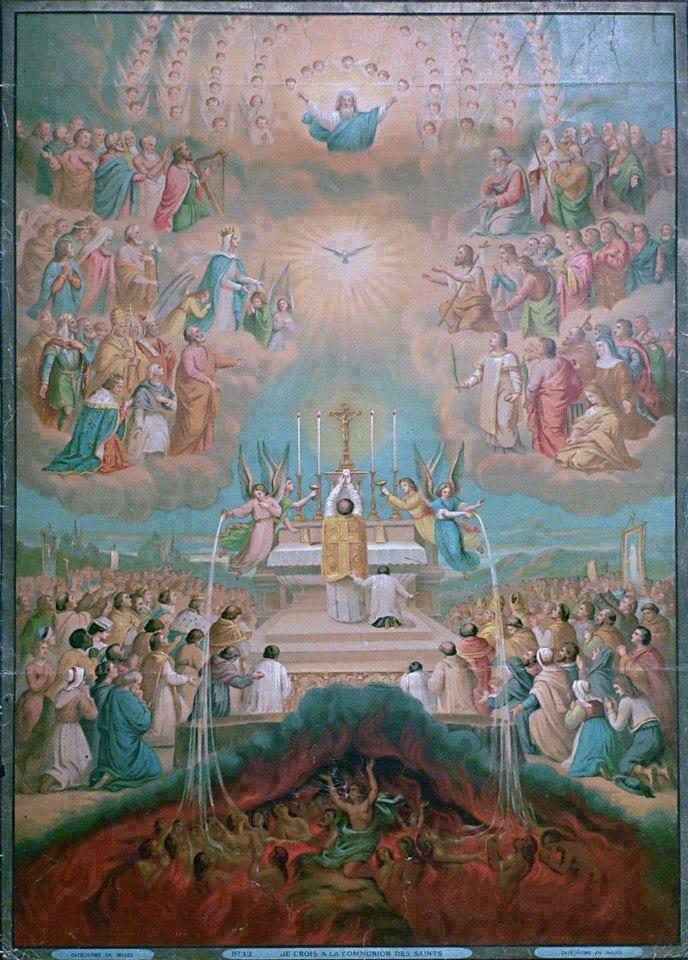
The Mass is the most important and sacred act of worship in the Catholic Church.
The Mass incorporates the Bible (Sacred Scripture), prayer, sacrifice, hymns, symbols, gestures, sacred food for the soul, and directions on how to live a Catholic life — all in one ceremony. Through time and space, we connect with the original Last Supper.
The Church teaches that the Mass is the re-presentation of the sacrifice of Calvary. This is misunderstood by many who claim that the Mass is a re-crucifixion of Christ. It is not. Jesus Christ celebrated the first Mass with His disciples at the Last Supper, the night before He died. He commanded His disciples, “Do this in remembrance of me” (Luke 22:19). The celebration of the Mass then became the main form of worship in the early Church, as a reenactment of the Last Supper, as Christ had commanded.
Each and every Mass since commemorates Jesus’ sacrifice on the cross through the Holy Eucharist. Because the Mass “re-presents” (makes present) the sacrifice on Calvary, Catholics all around the world join together to be made present in Christ’s timeless sacrifice for our sins. There is something fascinating about continuing to celebrate the same Mass—instituted by Christ and practiced by the early Church. Study Church history and see how the early Christians celebrated Mass, and you will see it is the same as how Catholics celebrate it today.
Attending Mass is not just an obligation, it’s a privilege. God knows we need it, and it is His gift to us. Mass should be the highlight of our week. We should look forward to going, and when we don’t, it’s a reminder that we need to work harder to more fully understand the reality of what happens at Mass. If you are a Catholic, you are supposed to go to Mass every week, and on Holy Days of Obligation. If you don’t understand the Mass, or are bored, and are looking for better “entertainment” – then pray for understanding. We don’t go to Mass to be entertained, or demand that the priest’s homily be exciting, or if it isn’t we aren’t going back. Some priests are more gifted with amazing homilies. Some are not. Pray for them all and listen to God’s word and participate in the holy sacrifice of the Mass regardless.
It’s human and natural to forget, want to sleep in, take it for granted, or become numb to it, but we have to continually work to overcome that trap. The devil is real and loves it when you stay home. At Mass we are being offered the greatest gift God has to offer – the source and summit of our Faith, Jesus Christ Himself in the Eucharist. Go whether you feel like going or not. Love is much more than feelings. Love is a sacrifice and putting others before yourself. Going to Mass is good for your eternal soul.
Learn your faith. Ask questions, study, read the Bible, and learn what it means to be a Catholic Christian. So many Catholics stopped learning about their faith after their 8th grade Confirmation. They left and joined mega churches which drew teens in, who then brought their parents in because of the exciting bands, great coffee, rock-star personalities, and a pulpit center stage rather than an altar. They have thrown out the sacred and holy – you won’t even find a cross in many of them – but you will have fun and be entertained. Many have replaced the sacred and the holy with elaborate light shows, re-branding of Christianity and enticing marketing campaigns. When you don’t understand your faith, or the Mass, it’s easy to leave it for someplace else that is exciting and sprinkles in just enough truth to make it sound believeable.
Some of the most passionate Catholics today are those who converted to Catholicism as an adult, and understand the meaning of the Mass and the Eucharist. So many of us were not taught our faith when we were young, but are now re-discovering the truth and beauty of it as adults.(Guilty as charged.) Learn your faith and learn why we do what we do. Don’t be tempted to leave the church founded by Jesus Christ for better entertainment, and if you have, please come back.
We go to Mass to worship God. We get down on our knees at Mass to humble ourselves before our King. It’s not about “us” remember. We go for Him. We understand the importance of the sacred and the holy, and how truth and beauty draw us closer to God, so that we can bring His love to others. We need God, though so many in our world today tell you not to worry about what God thinks of you, but only how you treat and love each other. Of course Jesus wants us to love one another – we love and serve the lonely, the poor, the disabled, those in prison, the immigrants, men, women and children around the world, but we also love and care what our loving God thinks of us, and we worship Him as Jesus instructed us to do 2000 years ago.
When we receive the Eucharist, we truly, physically receive the body, blood, soul and divinity of Christ, of God Himself – at every Mass. If you’re looking for a personal relationships with Jesus Christ, you can’t get any more personal than when you receive Him in the Eucharist. The Eucharist is the source and summit of our Catholic faith. Christ is truly present in the Eucharist with or without a dynamic homily. Notice how it is the altar that is front and center at a Mass, not the pulpit or a personality. The Mass is a sacrifice. We go to Mass to worship God, hear His holy word in the Liturgy of the Word, and receive Christ’s body, blood, soul and divinity in the Eucharist. An inspiring homily and beautiful music absolutely add to the beauty of the Mass, but even without these things, Christ is truly present in the Eucharist. That alone should make you want to never skip Mass, be there on time, not leave early without a good reason, and thank God for this wonderful gift.
Read, study, seek more understanding, and most of all, pray that you will come to a better appreciation and love for this most beautiful gift that Jesus Christ instituted at the Last supper 2000 years ago. God loves you. Please go.
Wishing you all a beautiful Sunday!
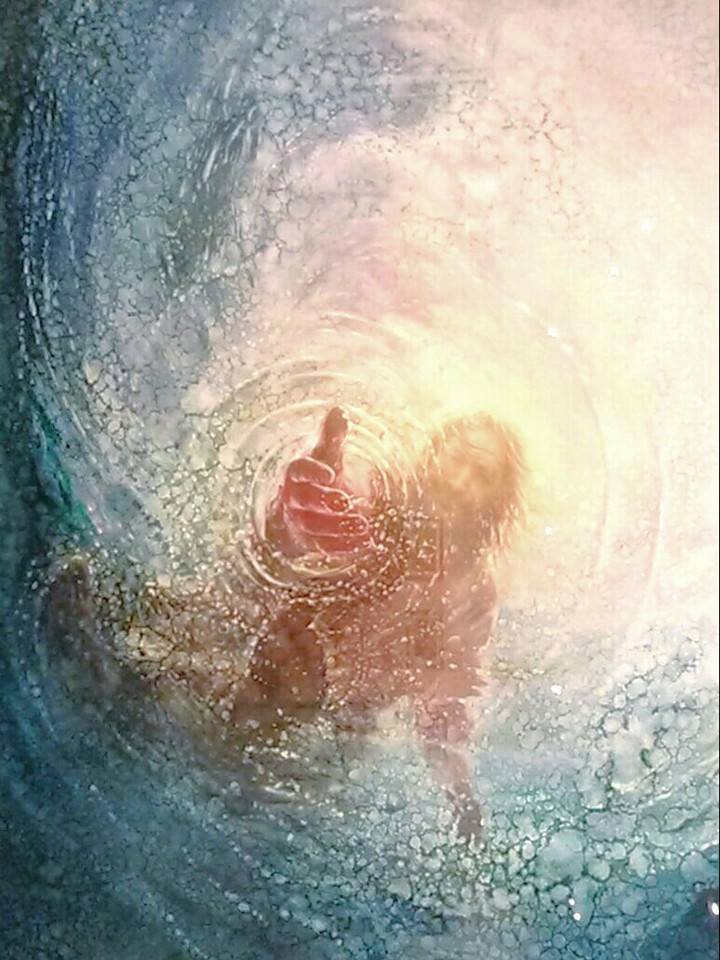
“He reached down from on high & took hold of me; He drew me out of deep waters.” Psalm18:16
When you find yourself in deep water, remember to keep the focus on Christ. Do not take your eyes off of Him. Pray and seek God’s will in all that you do, take His hand, and don’t let go.
 Love Being Catholic